PRISM is an innovative treatment developed by GrayMatters Health and approved by the FDA in January 2024. It’s the first self-neuromodulation device designed to help people with Post-Traumatic Stress Disorder (PTSD) retrain their brain’s response to stress, without medication.
At Butler Hospital, PRISM is now available as an outpatient clinical service through our Brain Research and Interventional Neurotherapeutics (BRaIN) Program, offering new hope to patients living with PTSD.
Butler Hospital
345 Blackstone Boulevard
Providence, RI 02906
(401) 455-6632
BRAIN@CareNE.org
Determining Eligibility
To learn more about PRISM or schedule a consultation, call (401) 455-6632 or email BRAIN@CareNE.org. A team member will contact you within 48 hours.
For Referring Providers
If you’d like to refer a patient for PRISM treatment, please download and complete our referral form here and fax it to (401) 455-6686.
PRISM uses advanced neurofeedback technology to help you learn how to regulate your brain’s stress response in real time.
During each session:
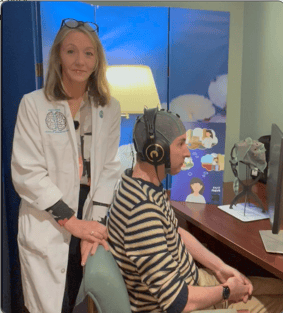
This process gives your brain instant feedback, helping you practice strategies that calm the overactive amygdala, the part of the brain linked to fear and “fight or flight.” Over time, you’ll strengthen your ability to manage PTSD triggers both in and outside of treatment.
Clinical studies leading to FDA approval found that:
Each PRISM session lasts up to 30 minutes, typically twice a week for 8 weeks.
PRISM may be a good option if you:
*PRISM is currently available on a self-pay basis.
You’ll sit comfortably in front of a computer screen while a technician fits you with an EEG cap. A small amount of gel helps the sensors pick up brain signals, similar to how an EKG records heart activity. The technician will explain each step, guide you through the session, and debrief with you afterward.
You’ll complete 15 sessions over the course of 8 weeks (usually twice a week). Each visit takes about 45 minutes.
PRISM is well-tolerated and has no known long-term side effects. Some people may experience mild eye strain or temporary fatigue from watching the screen, which typically resolves quickly.
A mental strategy might be a positive memory, emotion, or calming image that helps you feel grounded. During PRISM, you’ll explore different strategies until you find what helps the scene on screen become calmer; these same strategies can then be used in your daily life to manage stress or PTSD triggers.
By learning to down-regulate your stress response through practice, you’ll build lasting tools to help you feel more in control, calm, and resilient.
In addition to offering PRISM for PTSD, Butler’s BRaIN Program is conducting a clinical trial using similar technology to target a different brain circuit for Major Depressive Disorder (MDD).
If you or someone you know has MDD and would like to learn more, please call (401) 680-4143 for details about this non-pharmacological treatment study.
Copyright © 2023 Care New England Health System