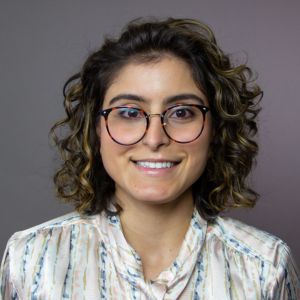
 Twice a year, the phone rings for the participants in the ADNI study at Butler Hospital's Memory and Aging Program. On the other end is a voice many of them have come to know well. For Priscilla Villa, MS, those calls are her favorite part of the work.
“The relationships I build with my participants are my favorite part of working in ADNI,” Priscilla says. “This population has so much life experience and wisdom to share, and sometimes there isn't anyone available to hear it. I am always happy to listen, and I am honored when they tell me how much they enjoy our chats.”
The Long View
A Rhode Island native, Priscilla found her way to brain science one step at a time. She was always drawn to psychology, but she felt that studying behavior alone did not give her the full picture. Combined with her love of biology, neuroscience became the natural next step. She earned her master's degree in interdisciplinary neuroscience at the University of Rhode Island. After spending time in behavioral health, an email about a neuropsychologist working at MAP drew her back into research. She started as a volunteer and never left.
“MAP's emphasis on clinical care and research initially drew me,” she says, “and then I stayed because of my love for the population and the ability to keep learning in this ever-growing field.”
As part of the Clinical Research Management team, she coordinates studies, conducts cognitive assessments, and helps onboard new research.
That perspective is what makes the ADNI study meaningful to her. The Alzheimer's Disease Neuroimaging Initiative examines the relationship between clinical, cognitive, imaging, genetic, and biomarker measures to better understand the full spectrum of Alzheimer's disease, from its earliest stages onward. By following the same individuals over years, researchers can capture insights that shorter studies simply can’t.
“Alzheimer's is thought to start in the brain before any cognitive symptoms even arise, and it can develop differently between individuals,” Priscilla explains. “Longitudinal studies like ADNI are important so that we can understand the disease from beginning to end, to help treat and predict outcomes when people seek clinical care.”
The data collected is shared broadly with the scientific community, helping shape research and clinical trials far beyond Butler's walls.
Why They Come Back
ADNI asks a great deal of participants: blood draws, cognitive assessments, physical and neurological exams, MRI and PET scans, and the ongoing involvement of a study partner. Yet they return year after year..jpg?width=300&height=400&name=Priscilla%20ADNI%20conference%20(1).jpg)
“Many participants and their study partners are motivated by an altruistic desire to advance the field because of their experience with family or friends who had or have Alzheimer's,” she says. “They hope their contributions will help guide the research toward a cure for future generations. Others are looking to learn more about their own brain health.”
This year, that second hope became more tangible. ADNI began disclosing PET scan results to participants, giving them a clearer sense of their own risk.
“These individuals are so grateful,” Priscilla says, “because they have been able to make more informed decisions about their clinical care and possible participation in trials they would not have considered otherwise.”
A Word of Thanks
Asked what she would most want to say to the participants reading this, Priscilla doens’t hesitate.
“I want to thank them and their study partners for taking time out of their lives to complete visits with me over the years. Their contributions are valuable, and I am often in awe of their dedication to continue participating in any way possible, year after year.”
Away from the lab, Priscilla is a devoted reader who belongs to several book clubs and spends her free time taking road trips with her dog, Ollie. What gives her the most hope right now are advances in anti-amyloid therapies that have been shown to slow the disease. Until a cure arrives, the phone will keep ringing every six months, and a familiar voice will be there to listen.
 Participant & Staff Spotlight: A Familiar Voice on the Line"
class="bg-img"
fetchpriority="high"
loading="eager"
decoding="async">
Participant & Staff Spotlight: A Familiar Voice on the Line"
class="bg-img"
fetchpriority="high"
loading="eager"
decoding="async">